


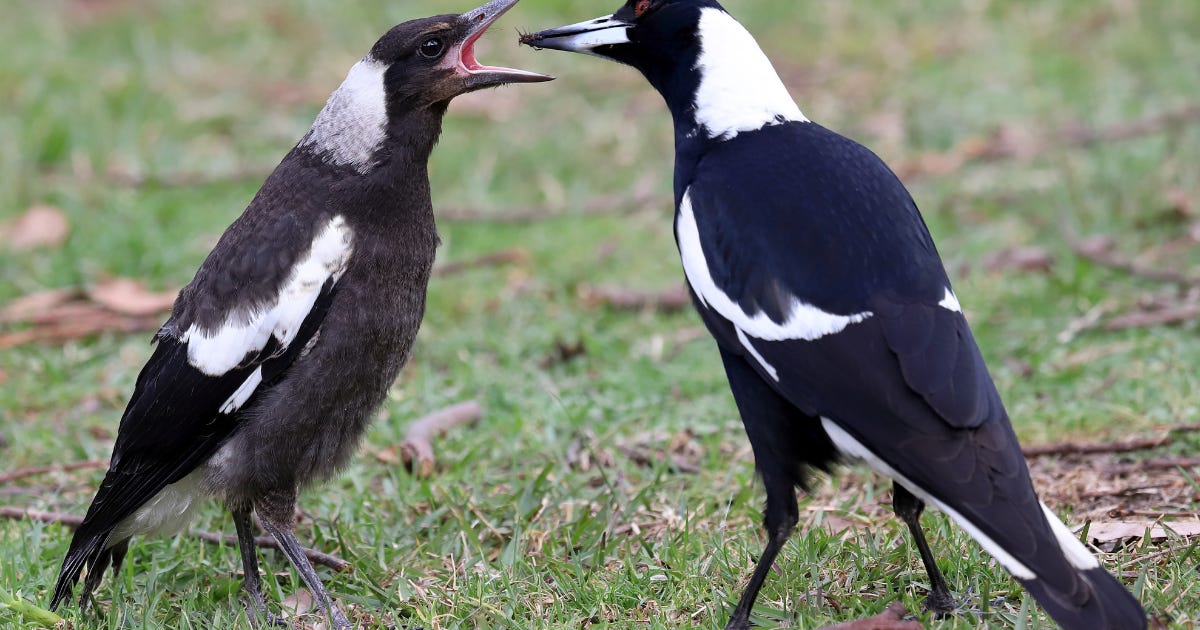
“I hate you. You and your black and white terrorist friends.”
Words I screamed silently into the sky as a kid, trying to balance my bike mid-attack from swooping plovers and magpies. Walking or riding to school across the park was a nightmare. If mobile phones had existed back then, there would be plenty of YouTube videos of me ducking, weaving, flailing arms and legs, all while pretending I was still cool in a dorky helmet covered in long plastic straws. My protection against the Red Baron of the skies.
Every. Bloody. Spring and summer.
Australian kids have been running this gauntlet forever. The kids of the 1950s did the same walk to school with nothing but a school port to hold over their heads, and I’d bet the stories they told their mothers when they got home sounded much the same as mine.
The story I’m about to tell you happened a couple of summers ago in my own front yard, and it’s the reason I feel slightly differently about my aerial terrorists now.
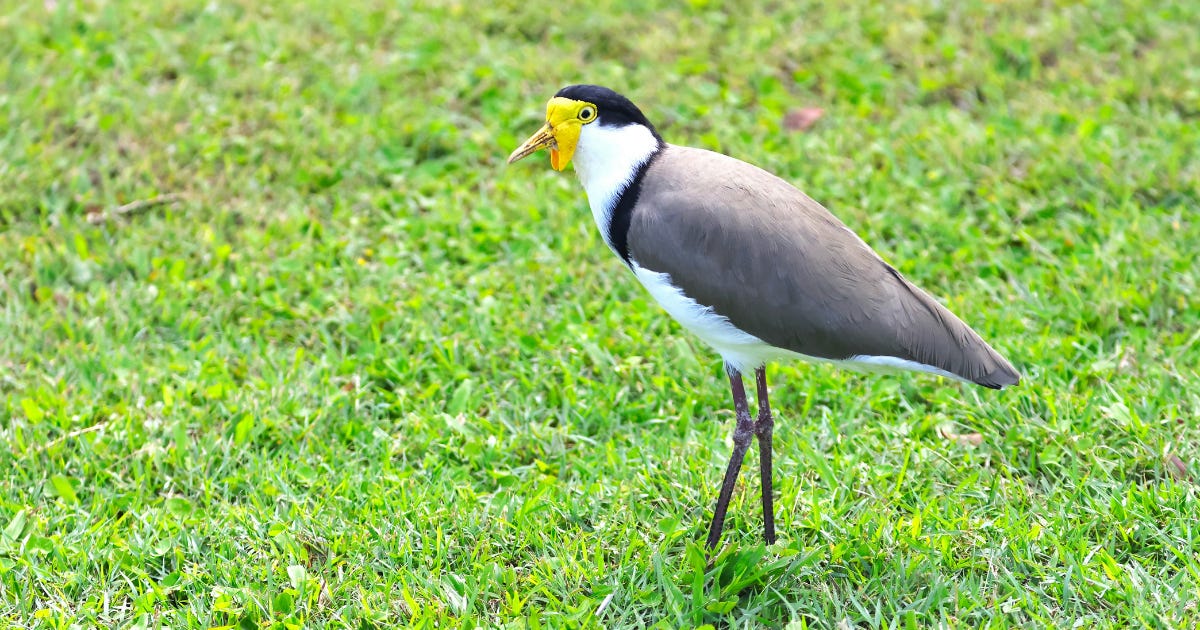
I truly hated these devils of the ground and sky until that spring, when I discovered quite by accident that I was the proud landlord of a pair of plovers who had decided my front yard was the perfect place to start a family. The bird books call them masked lapwings. Nobody who has ever been swooped by one calls them that, by the way.
I’d often chuckled at my neighbours who’d had the same privilege in previous years, smugly certain I was safe.
Not that year.
Here’s how it unfolded.
Weeks before we were due to leave on a family camping holiday, I noticed two plovers hanging around a section of the front yard, doing some kind of dance, bobbing their heads and taking particular interest in one spot in the middle of the lawn. Not convenient for mowing purposes. My husband had to arm himself with a helmet and eyes in the back of his head, and he left a large patch of unmown lawn around the nest they were preparing. Take your life into your own hands if you approached the area. So we learned to begrudgingly live with our unwanted tenants and gave them space to do what nature intended.
We left on our camping trip, and when we arrived home a few weeks later we found four green and black speckled eggs sitting in that nest, conveniently located right on the ground in the middle of the lawn, complete with a proud mama (or papa) nestled on top
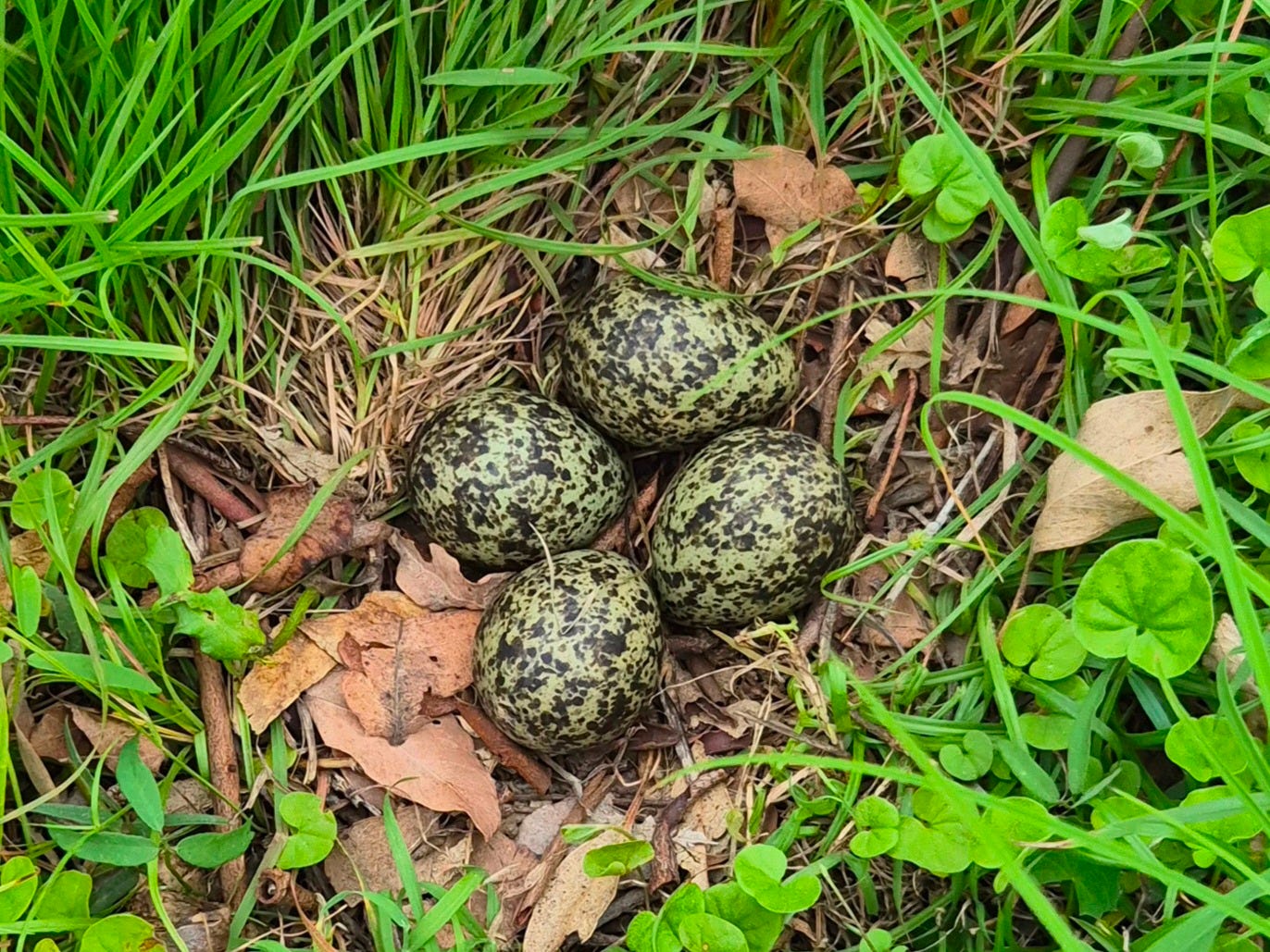
The only time either of them left was to look for food, and the other parent took over the protective duties. They screamed at us when we walked anywhere near, or even when we watched from the window overlooking that section of the yard. We kept mowing around them and giving the nest a wide berth, so it sat in a patch of long grass with a neatly mowed circle around it.
Despite our best efforts not to disturb them, they hated us.
And yet I was fascinated. When I desperately googled Siri for answers to “how long does a plover sit on the nest” and “when will I get my front yard back”, I learned they sit for about four weeks, with mum and dad taking turns at parenting duty. Then, if the eggs hatch, the chicks stay close to the nest for another month or so. Great.
Here’s the part that got me. We’d had the most terrible weather, slashing rain for days alternating with fierce heat, then back to heavy rain and wind, and there they sat, out in the elements, protecting those four future terrorists. Their instinct to protect the new family was stronger than their own discomfort. They don’t quit when the going gets tough. There’s a message in that.
But, strangely, I started feeling protective of my front yard terrorists. When I heard them squawking, I’d race to the window to make sure nothing was bothering them. Often the eggs don’t survive, with goannas and carpet snakes always on the lookout for an easy feed. But what sort of nut races to the window every ten minutes for a bird she claims to hate?
The Homecoming
It was probably never going to end well.
We left for a Christmas break interstate, and the whole time away my thoughts kept straying to their welfare. Are they okay? Have they hatched? How are they coping with the horrendous weather at home? Would mother and father protect newly hatched babies the way they’d protected the eggs? All these questions ran riot in my over-anxious brain.
Once home and inside the front gate, I raced from the car, into the house, straight to the window overlooking the front yard, only to find
Nothing.
No sign of mother, father, eggs or eggshells. Nothing.
To say I was quietly upset is an understatement. My worst fears had come true. A goanna had taken the eggs while the house and yard sat empty. My mind kept replaying images of the parents swooping uselessly against the reptilian traitor in my yard. Would I have been able to save them if I’d been here, making noise as if the house was occupied and checking on their welfare every ten minutes?
The guilt bubbled away under the surface, and pity too, for a mother and father who couldn’t protect their offspring. Do birds even feel hopeless? Do they grieve? Or does instinct simply take over, and they get on with it and try again next season?
I even spared a thought for the goanna. Was he starving, with babies of his own to feed? I know there’s a hierarchy in the animal world, but it cuts me up to see it play out on my own front lawn.
The following spring they came back and did the whole thing again, in exactly the same spot, with exactly the same result. Nobody has ever accused a plover of being a quick learner. I haven’t seen them at all this year, so maybe they’ve finally got wise and found somewhere better.
Or maybe next year I’ll be the one who gets wise and schedules the holidays so I’m home for plover season.
P.S. No birds, real or imagined, were harmed in the telling of this story. Except for the eggs.
Now it’s your turn. Do you have a swooping season story? A magpie with a grudge, a plover that claimed your lawn, a helmet full of zip ties? Leave a comment below. I want to hear that I’m not the only one who’s done battle.
The Dear Viv Letters is a 12-month fictional story subscription set in a 1950s Queensland guesthouse, delivered by post with original watercolour artwork. If you like stories about the small dramas playing out in Australian backyards, there might be a letter with your name on it.