
The Grandmother Effect
Why the creative themes you keep returning to are not a coincidence

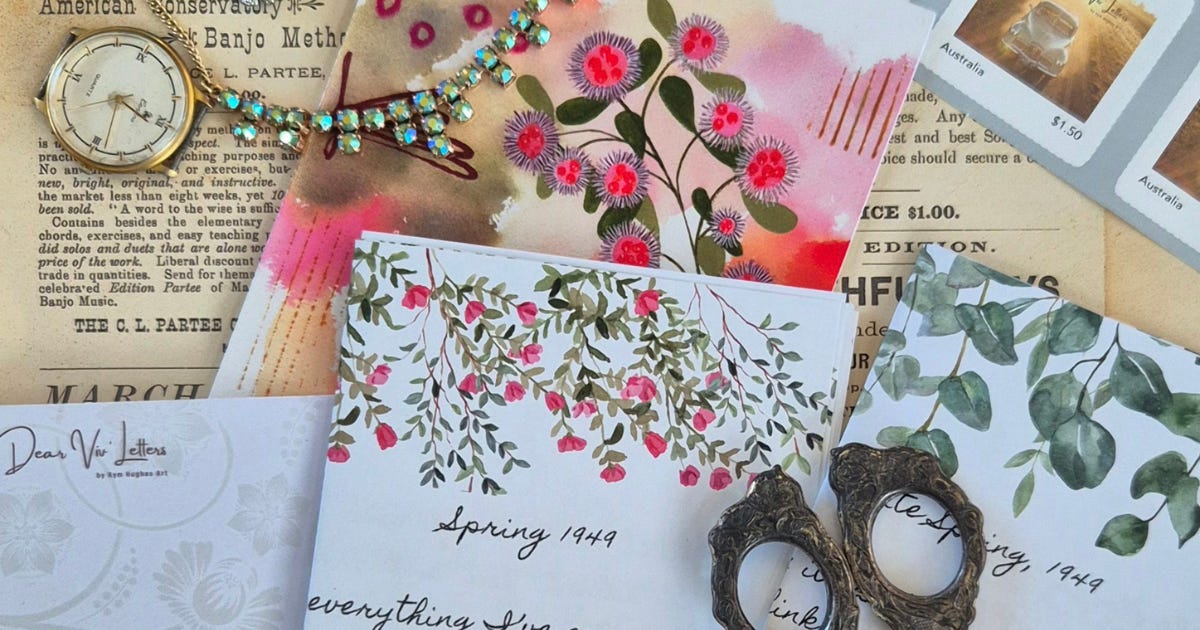
Have you ever noticed that your creative work keeps returning to the same things? The same textures, the same era, the same kind of atmosphere. You go there without really thinking about it, and when someone asks why, you don’t have a clear answer.
I’ve been wondering about that for a while now. Why the 1950s? Why analogue objects and slow living? Why do I keep writing about ordinary domestic life?
It’s an odd thing to notice about myself. Not a problem exactly, more like a thread I keep pulling without meaning to.
I think I finally know the answer, and unsurprisingly, it starts a long way back.
The things that feel permanent
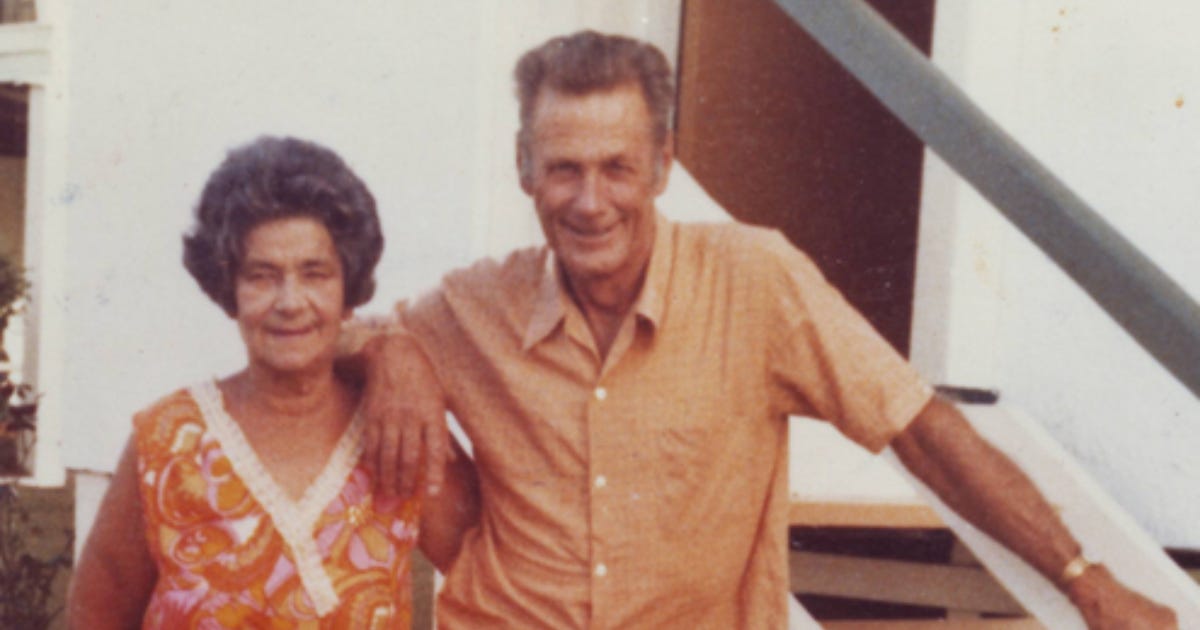
My grandmother, Nanna, was simply a constant in my childhood. Every birthday, every Christmas, every Friday night. I didn’t think anything of it because that was just how it was. All families were the same as far as I knew.
Nanna was funny and a little quirky. She wore her red lipstick beyond her lip line, which I thought was enormously glamorous. She sewed shift dresses by hand while watching television at night, always the same pattern with different fabric and trims and always with pockets sewn into the front where she could quietly tuck her cigarettes (she pretended she didn’t smoke). She was always on the lookout for something ‘contemporary’, which to her meant a bright, colourful fabric. She made good gravy from scratch. She laughed a lot.
Every week she visited her sister, Aunty Olly, on Tuesday afternoons. They would sit together and string beans or shell peas. Olly was killed by a car while crossing the street near her house when I was quite small. I never did understand what had happened to her. Her visits just stopped.
When television first came to Australia, Nanna’s living room became our family’s theatre. Friday nights, the whole family gathered around her set to watch the Mavis Bramston Show or whatever had the country talking that season. We didn’t have a television of our own. Afterwards, Mum and Dad would bundle us four kids into the car for the hour-long drive home in the biting cold of a Queensland winter’s night, and I fell asleep on the freezing vinyl of the car’s backseat.
Sundays meant Redcliffe or Sandgate. We’d sit on the old stone walls with a bottle of Fanta and a paper parcel of fish and chips, the water out in front of us and nobody in a hurry.
I made two Mother’s Day cards every year at school, one for Mum and one for Nanna, and it never occurred to me that was unusual. I wish I still could.
The things you don’t notice until later
The thing about a presence that’s always been there is that you stop noticing it. It’s just part of how life is, so ordinary that it never occurs to notice it.
But all of it goes in anyway. The small rituals of an ordinary, consistent life become the picture you have in your head of what home looks like. What home is.
I didn’t realise until I’d been writing The ‘Dear Viv’ Letters for a while that the Redcliffe waterfront kept appearing in the stories, and the stone walls, and the fish and chips, and that unhurried Sunday pace. I thought I was just choosing a setting, but subconsciously I was choosing a memory.
And Lil, one of the characters in those letters, carries something of Nanna in her. Her warmth, her way of being present without making a fuss about it. I didn’t sit down and decide to write Nanna into the story. She just appeared.
Why this matters for your creative work
I don’t think creative obsessions are random. I think they’re more like archaeology, where you’re digging toward something that was put in you a long time ago, by people and places and routines so unremarkable that you never thought to write them down.
If you keep returning to a particular era, or a particular mood, or a theme in your work that you can’t quite explain, it’s worth asking yourself where you first encountered that feeling. The answer is probably not grand or dramatic. It’s probably a person or a life that felt completely unremarkable at the time.
That’s what I’ve started calling the grandmother effect. Not what they taught you in words, but how their presence passed on something much deeper.
This Mother’s Day, if you still have someone to ask, ask something small. How did you spend your Saturday mornings? Tell me about your favourite dress. How much was a yard of fabric when you were younger? One day you’ll be glad you asked.
And if you’re missing someone this Mother’s Day, I find comfort in knowing they never really left. They’re in the things we make, the lives we live and the people we become.
I am my grandmother in so many ways. She’s still here. Still with me after 50 years.
I had a nana, too. She was my great-grandmother, and had a big influence on me, growing up.